
Walk into our showroom on a Saturday and you will hear some version of the same question. Should the new kitchen get engineered quartz or a porcelain slab? Both surfaces earn their popularity, and both get oversold by salespeople who only carry one of them. The honest answer depends on the room, your cooking habits, and your fabricator. Here is the comparison the way we walk it at the slab rack, condition by condition.
Where the Market Stands in 2026
Countertops remain the most upgraded surface in American kitchens. In Houzz’s 2026 kitchen study, 91 percent of renovating homeowners replaced their countertops. Engineered quartz led the material list at 39 percent, quartzite followed at 33 percent, granite came in at 9 percent, marble at 6 percent, and porcelain at 4 percent. Porcelain’s small share does not mean it is a weak product. It means the category is still young in American kitchens and fewer shops fabricate it confidently, which matters more than any brochure claim, as we will see below.
The professional forecast points the same way. The National Kitchen and Bath Association’s 2026 kitchen trends survey found professionals expecting quartz at 62 percent and natural quartzite at 61 percent among the leading countertop materials. The same NKBA report put ceramic and porcelain tile at 70 percent for backsplashes. Read those numbers together and a pattern appears. Porcelain is winning walls faster than it is winning counters, largely because thin wall tile is a mature trade while porcelain slab fabrication is still a specialty.
Appearance and Edge Design
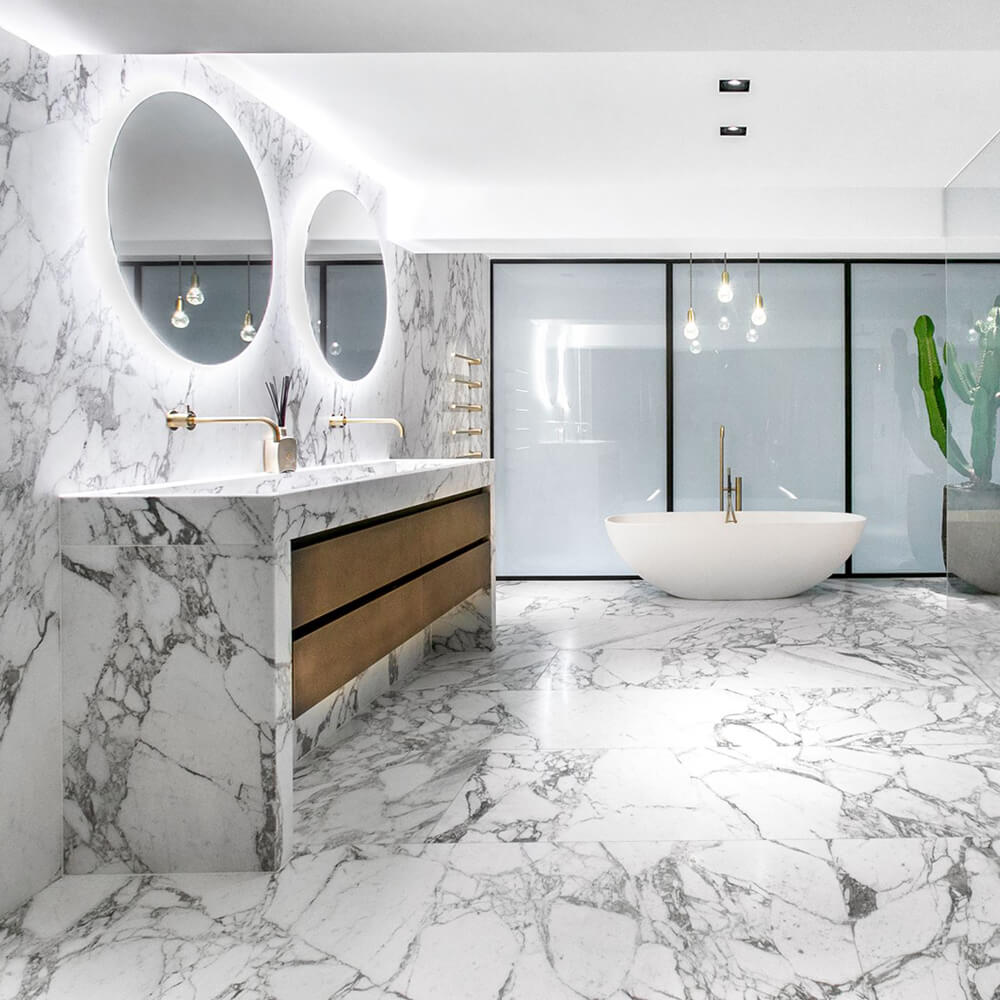
Engineered quartz carries its color and pattern through the body of the slab. That gives you an enormous palette, from quiet solids to bold marble looks, with the same material showing at every cut. Porcelain slabs typically carry their pattern as a printed design on the face, and the printing has become remarkably convincing. Dramatic book-matched veining, weathered concrete, even oxidized metal looks are all available in porcelain lines.
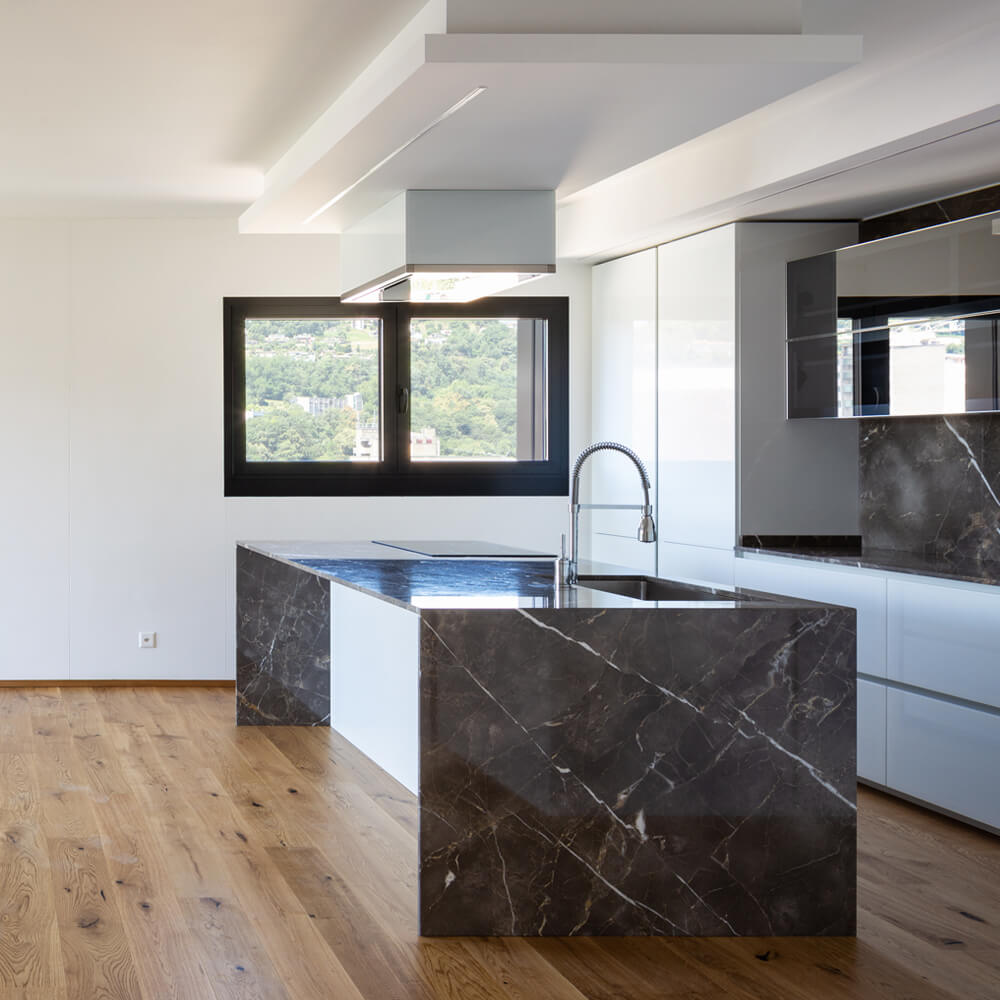
The difference shows up at the edge. Because the pattern on many porcelain slabs lives on the face of a thin panel, fabricators usually build a mitered edge to carry the veining around the corner. Quartz, with color running through the body, takes eased, bullnose, and other shaped profiles without revealing a different core. If you love a chunky waterfall island with continuous veining, ask to see a finished porcelain miter in person before you commit. A good one is seamless. A rushed one announces itself from across the room.
Heat, Sun, and Stains
Manufacturer documentation is where the two materials genuinely separate. Caesarstone, one of the larger names in both categories, describes its porcelain as nonporous, stain resistant, UV resistant, heat resistant, and needing no sealer. Those are manufacturer claims rather than universal physics, so verify them against the warranty and care guide for the exact product you select. Still, they explain why porcelain keeps coming up in conversations about outdoor kitchens and sunny window runs.
Quartz reads differently in its own paperwork. One engineered quartz safety data sheet published in March 2026 lists a composition of 85 to 90 percent crystalline silica bound in polymer resin and advises against prolonged outdoor UV exposure, direct flame, and extreme heat. The resin binder is why quartz is so easy to live with indoors, and it is also why we never recommend it for uncovered outdoor counters or as a landing zone for pots straight off the burner. Specifications vary by brand, so the documentation for your selected slab controls. Trivets are cheap. A resin scorch mark in the middle of an island is not.
Thickness, Fabrication, and Installer Experience
Quartz commonly arrives in thick slabs that shops have cut and seamed for two decades. With a 39 percent share of upgraded countertops in the Houzz study, quartz is the material every fabricator in Western North Carolina knows cold. Porcelain slabs are often thinner and less forgiving during cutting, handling, and transport, and the skill gap between an experienced porcelain shop and a first-timer is wide. Before you sign, ask the fabricator two questions. How many porcelain slab installations has the shop completed, and can you see one in person or in photos of their own work? A confident answer to both is worth more than any showroom pitch.
A Word About Shop Safety
One more question belongs on your list, and it concerns the people who build your counters rather than your family at home. An installed countertop is not hazardous in normal household use. The silica issue in this industry arises where stone products are cut, ground, and polished. In March 2026, OSHA cited two Georgia stone businesses over employee exposure to respirable crystalline silica and stated that inadequate control can cause silicosis, lung cancer, and other respiratory disease. OSHA’s guidance for stone fabrication recommends wet cutting methods, local exhaust ventilation, HEPA cleanup, exposure assessment, worker training, and respiratory protection where required. Ask your fabricator how the shop controls dust. In our experience, the shop that answers that question quickly and specifically is the same shop that miters porcelain cleanly and pulls quartz seams tight. Craft and safety travel together.
How to Make the Call
- Lean porcelain when the counter will see direct sun or an outdoor kitchen, when you want printed marble or concrete looks in a thin profile, and when you have access to a fabricator with real porcelain slab experience.
- Lean quartz when you want the widest color selection, shaped edge profiles, a huge installer base, and a fully indoor kitchen away from direct flame and prolonged sunlight.
- Either way, read the warranty and care guide for the specific product, since claims about heat, UV, and sealing vary from brand to brand.
- Bring your samples. A cabinet door and a flooring offcut next to a full slab will settle more debates than a week of online research.
The fastest way to end the quartz versus porcelain debate is to stand in front of full slabs of both with your cabinet sample in hand. Our Western North Carolina showroom stocks engineered quartz, porcelain, and natural stone side by side, and our consultants will walk you through fabrication, edges, and care for your exact project. Visit Stone Gallery of WNC to browse the slab yard or schedule a consultation, and leave with a surface you will trust for decades.
how to protect a bathroom with marble surface?
Honed, Leathered, or Polished? Choosing a Natural Stone Finish That Fits the Room