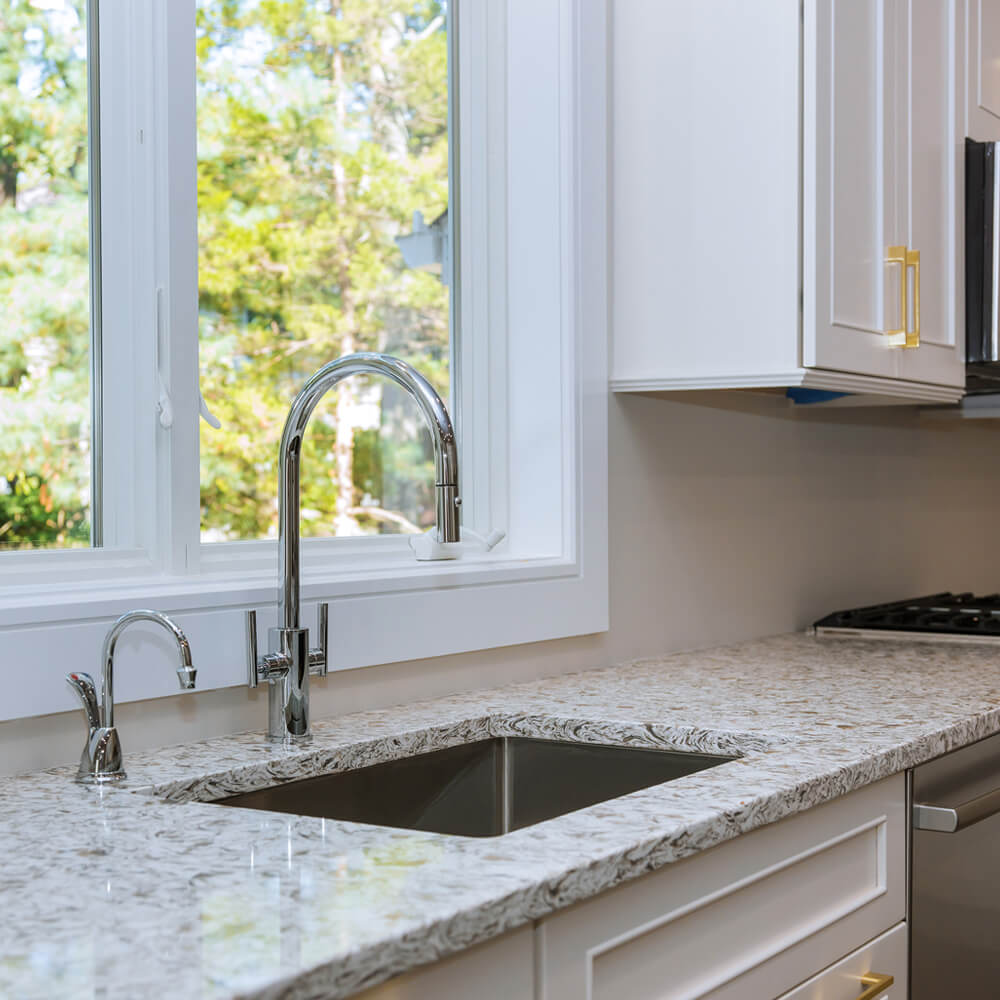

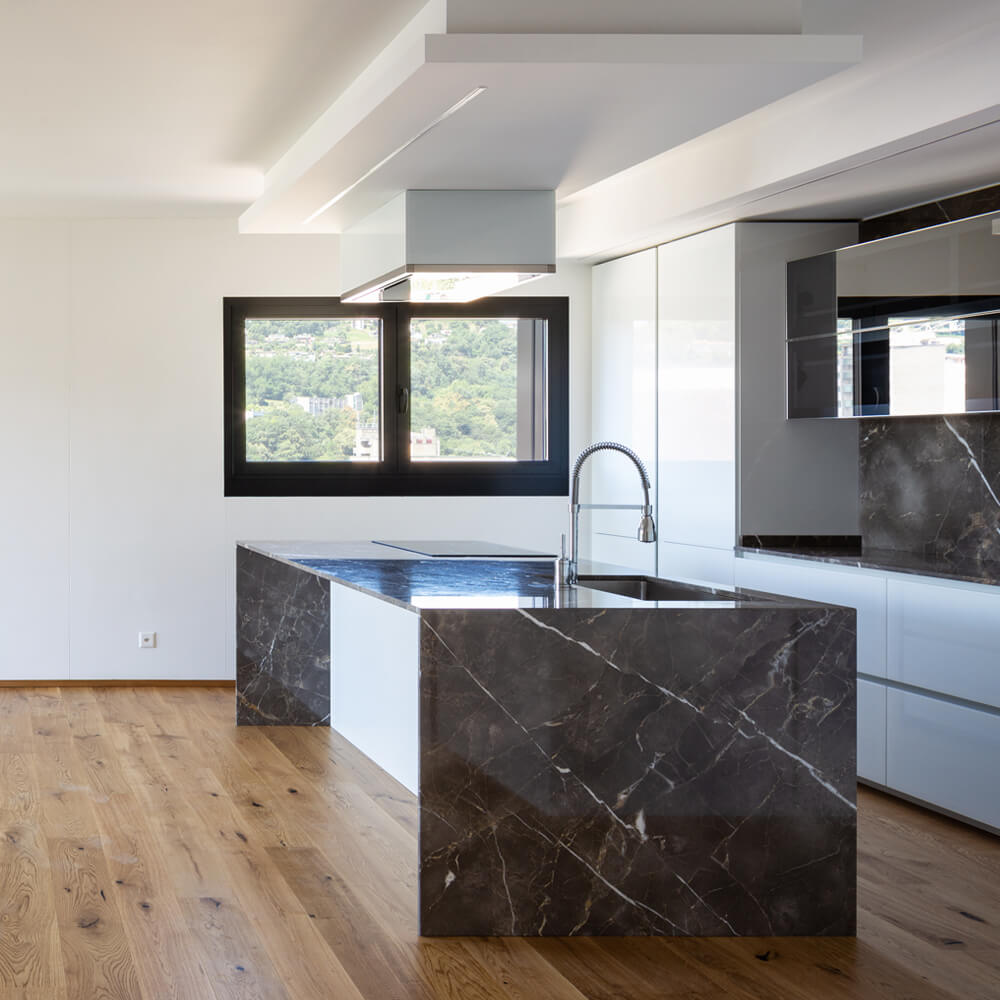
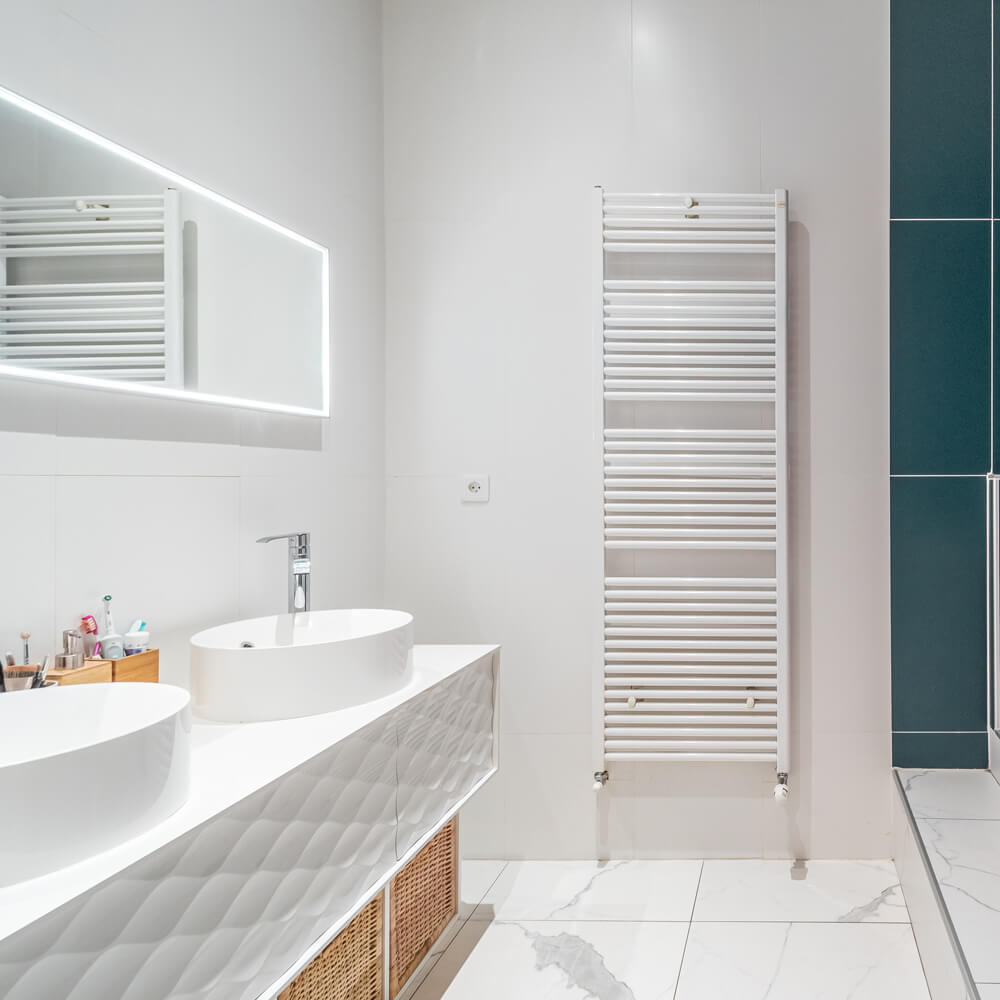
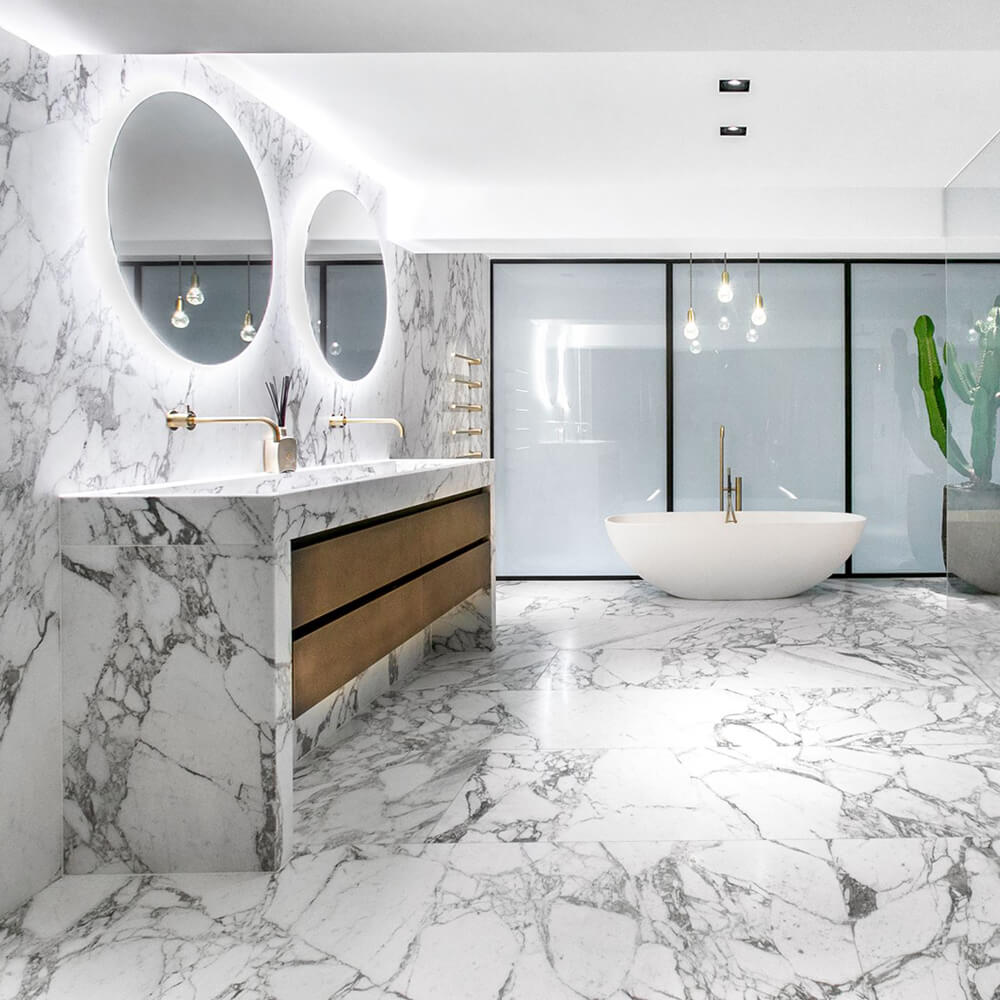

Two slabs cut from the same block of granite can read as two different stones once they leave the finishing line. Polished, honed, and leathered surfaces change how a stone holds color, light, fingerprints, and even footing, which is why we treat the finish decision with the same seriousness as the choice of stone itself. Here is how we walk clients through natural stone finishes in the showroom, and how to land on the one that fits your room instead of the one that photographed well online.
What Each Finish Actually Is
A polished finish is the classic mirror-gloss surface. It saturates the stone’s color, throws light around the room, and puts every vein and crystal on display. For generations it was the default, and for formal spaces it still earns the job.
The two alternatives have been gaining ground. According to the Natural Stone Institute, honed stone carries a matte surface, while leathered finishing adds tactile texture to the face of the slab. The institute has reported growing interest in both matte and textured finishes, and our own showroom traffic agrees. Clients who once asked for polish by default now run a hand across a leathered slab and linger.
Color, Light, and Mood
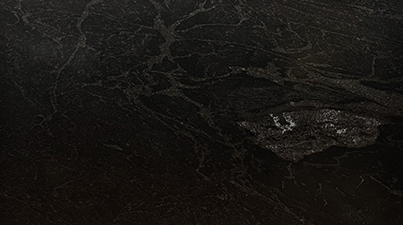
Polish deepens color the way water darkens a river rock. A polished black granite reads as a true mirror-black. Hone the same stone and it softens toward charcoal, with a quieter, more architectural presence. Leather it and the surface picks up small shadows and highlights across its texture, giving dark stone a rugged depth that flat finishes cannot fake. If your room has large windows, remember that a polished counter reflects them, while honed and leathered surfaces absorb that light and calm the space.
Touch, Fingerprints, and Daily Cleaning
Under real kitchen use the finishes behave differently. Polished dark stone shows fingerprints and water spots readily and rewards a quick daily wipe. Honed surfaces hide glare but can display oils and smudges on darker colors until cleaned. Leathered texture tends to disguise everyday marks, which is one reason busy households gravitate to it.
None of this means one finish is simply easier. The Natural Stone Institute cautions against assuming a universally low-maintenance choice, advising instead that the correct sealer and maintenance routine be selected for polished, honed, and leathered finishes alike. The right routine depends on the stone, the finish, and the room, so ask for care instructions written for your specific slab, not a generic handout.
Match the Finish to the Stone, Not Just the Room
Finish decisions should ride on the geology underneath. Quartzite, per Natural Stone Institute guidance, is generally harder than granite and can offer a marble-like appearance, but its porosity varies from slab to slab. The institute recommends testing the specific slab rather than assuming every quartzite needs the same sealing routine, and we perform that check before a slab of quartzite leaves our yard.
Softer calcareous stones demand more respect. Limestone and travertine are acid sensitive, and the institute reports absorption ranging from less than 1 percent to more than 10 percent depending on variety. That spread matters outdoors. Only suitable varieties belong on exterior paving in freeze-thaw climates, and Western North Carolina winters qualify. A honed limestone that thrives in a powder room can fail on an uncovered mountain patio, so location and finish get decided together with species, expected wear, sealer, and maintenance routine.
Mixing Finishes in One Installation
You do not have to pick a single finish per project, or even per stone. Designers regularly mix finishes within one installation, pairing honed flooring or shower niches with polished wall surfaces to shift reflection and emphasis without changing the stone species. The Natural Stone Institute highlights exactly this approach. It keeps a bathroom feeling cohesive while giving the floor a softer, more forgiving surface and letting the walls carry the drama.
Already Own Polished Granite? You Have Options
Finish is not locked in at purchase. Existing polished granite can often be professionally refinished to a honed surface, which turns finish selection into a renovation decision as well as a new-purchase one. If your kitchen’s glossy counters feel dated but the stone itself is sound, refinishing can deliver a current matte look for far less than replacement.
The Dark Stone Moment
Finish choice matters most on dark, consistent stone, and dark stone is having a moment. The Natural Stone Institute selected Virginia Black Granite as its 2026 Stone of the Year, a material used on interior and exterior walls, floors, countertops, and facades. On a stone that uniform, the finish becomes the design. Polished reads formal and reflective, honed reads modern and quiet, leathered reads organic and grounded, all from the same quarry.
Before You Decide
- View full-size samples under your room’s actual lighting. A 4-inch chip under showroom spots tells you almost nothing about how a leathered slab behaves at dusk in your kitchen.
- Decide the package together. Stone species, finish, location, expected wear, sealer, and maintenance routine are one decision, not six.
- Test the slab. Especially with quartzite, ask for a slab-specific check instead of a category-wide assumption.
- Think about traction. On floors and around tubs, honed and textured surfaces are worth a close look compared to high gloss.
The best way to choose between honed, leathered, and polished is to touch all three on the stone you actually love. At Stone Gallery of WNC you can compare finishes on full slabs, borrow samples to view under your own lighting, and get slab-specific care guidance from consultants who work with these materials every day. Stop by the showroom or schedule a visit, and let the stone show you what it can do.

Quartz or Porcelain Slab in 2026? How to Choose the Right Countertop Surface
2026 Tile and Flooring Trends That Still Work in Real Homes